
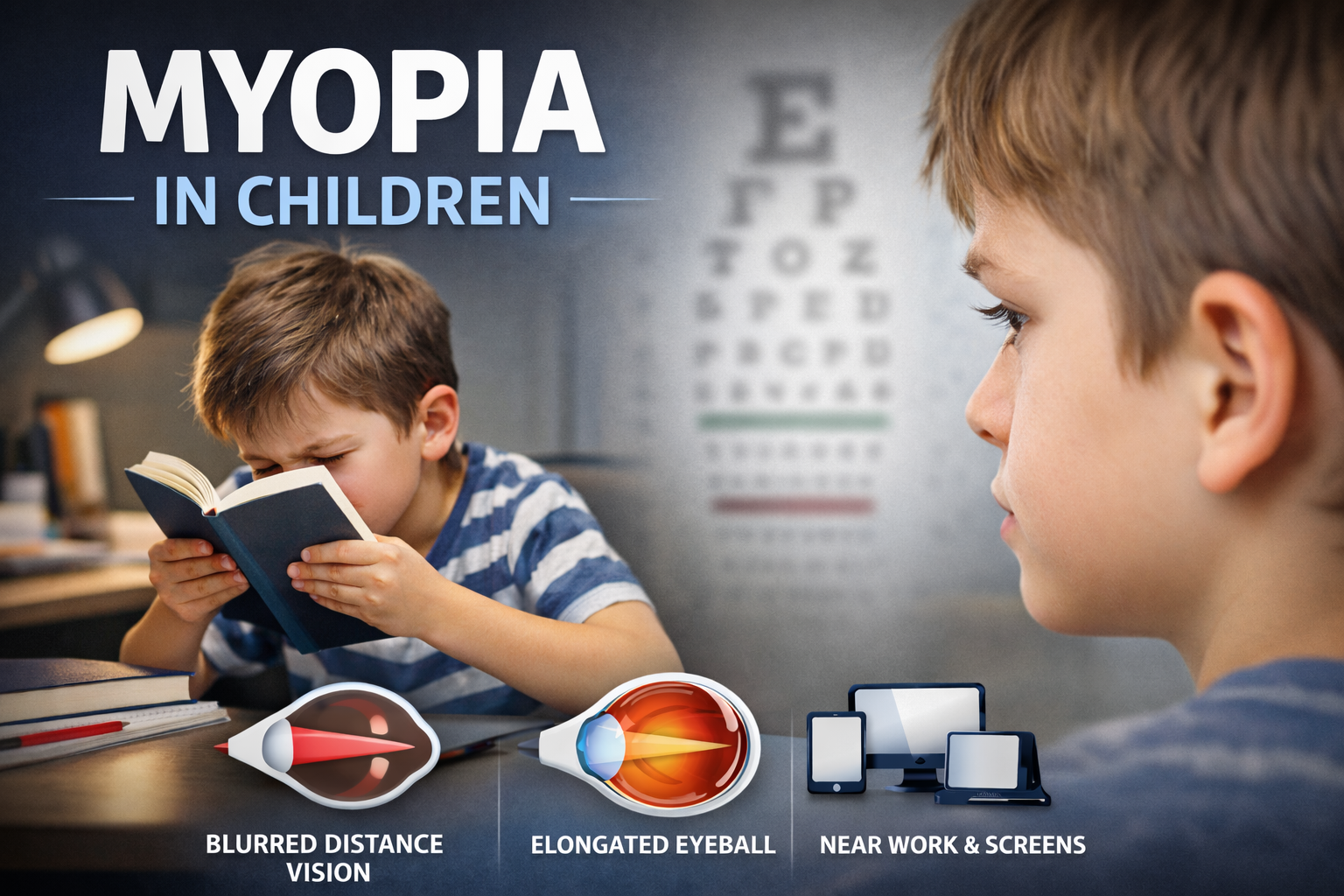
Is your child squinting at the TV, complaining of headaches after school, or sitting unusually close to screens? These could be early signs of myopia (shortsightedness)—a condition now affecting one in three children worldwide. The good news? Early detection in Hurstville makes all the difference.
What Georges River Parents Should Know About Myopia in Children
Childhood myopia rates have surged in recent years—climbing from 24% in the 1990s to nearly 36% today. Experts predict this will reach 40% by 2050. The increase is linked to more screen time, less outdoor play, and changing lifestyles affecting families throughout Hurstville, Kogarah, and surrounding suburbs.
But here’s the encouraging news: the latest International Myopia Institute guidelines confirm that delaying myopia onset by just one year provides significant long-term benefits for your child’s eye health. Early intervention truly matters.
5 Warning Signs Every Hurstville Parent Should Know
Children often don’t realise their vision isn’t normal. Watch for these telltale signs:
1. Squinting or Scrunching Eyes
Does your child narrow their eyes to see distant objects like the TV, road signs, or the whiteboard at school? This is one of the most common early indicators of myopia.
2. Sitting Too Close to Screens
Children with developing myopia naturally move closer to TVs, tablets, or hold devices near their face to compensate for blurry distance vision.
3. Frequent Eye Rubbing or Blinking
Excessive eye rubbing or rapid blinking can indicate eye strain from uncorrected myopia, especially after reading or schoolwork.
4. Headaches After School or Homework
Regular headaches, particularly in the afternoon or after concentrated visual tasks, may signal that your child is straining to see clearly.
5. Difficulty Seeing the Whiteboard
If your child’s teacher mentions they’re having trouble seeing the board at Hurstville Public, Penshurst High, or any local school, don’t wait—book an eye exam immediately.
When Should Children in Georges River Have Their First Eye Test?
Your child’s eyes are checked at birth in the hospital, and quick vision screenings are performed during childcare to pick up any major defects. However, these basic screenings can miss many vision problems.
We recommend your child’s first comprehensive eye examination before starting kindergarten. This thorough assessment at Viewpoint Optical goes well beyond a simple screening—it evaluates how well your child’s eyes work together, checks for early signs of myopia, and ensures their vision is ready for learning.
After that, children should have their eyes examined every 1–2 years throughout their school years, or annually if they’re already wearing glasses.
What’s Normal for Children’s Vision Development?
Most young children are naturally slightly longsighted—this is perfectly normal and typically corrects itself by age 6. Adult-level vision (20/20) usually develops between ages 5 and 7.
Myopia typically develops between ages 5 and 14, progressing through the teenage years before stabilising in the early twenties. The earlier it begins, the more it tends to progress—which is why early detection and management are so valuable for families in Hurstville.
Simple Steps to Protect Your Child’s Vision
Encourage outdoor time. Aim for at least 2 hours daily in Hurstville parks or your backyard. Research shows this can reduce myopia risk by up to 50%—it’s the single most effective preventive measure.
Follow the 20-20-20 rule. Every 20 minutes of screen time, look at something 20 feet away for 20 seconds.
Manage screen distance. Ensure devices are held at arm’s length, not close to the face.
Book regular eye exams at Viewpoint Optical. Early detection opens up the most treatment options.
If your child does develop myopia, today’s management options go far beyond standard glasses. Specialised lenses, contact lenses, and other treatments can help slow progression—protecting their vision for life.
Protect Your Child’s Vision Today in Hurstville
Your child’s eyesight is precious, and early action makes a real difference. At Viewpoint Optical, our experienced team provides thorough, child-friendly eye examinations and can discuss the latest myopia management options tailored to your child’s needs.
Ready to book your child’s eye exam? Schedule an appointment at Viewpoint Optical or call us on 02 8021 2298 to find out more about children’s eye health and myopia management. We’re conveniently located on Forest Road, Hurstville—easy access from all Georges River suburbs.
Your child’s clear vision starts with a simple eye test. We’re here to help.