
Good news first: High myopia doesn’t have to be inevitable. With modern myopia control, families throughout Georges River are reducing their children’s progression by up to 60%.
Last week, we discussed the warning signs of myopia in children and why early detection is so important. But here’s the question many Hurstville parents ask: “It’s just glasses, right? What’s the big deal?”
The truth is, myopia isn’t just about needing thicker lenses. High myopia—typically defined as a prescription of -6.00 dioptres or stronger—significantly increases your risk of serious, sight-threatening eye conditions later in life. And the higher the myopia, the greater the danger.
Why High Myopia Is More Than Just Blurry Vision
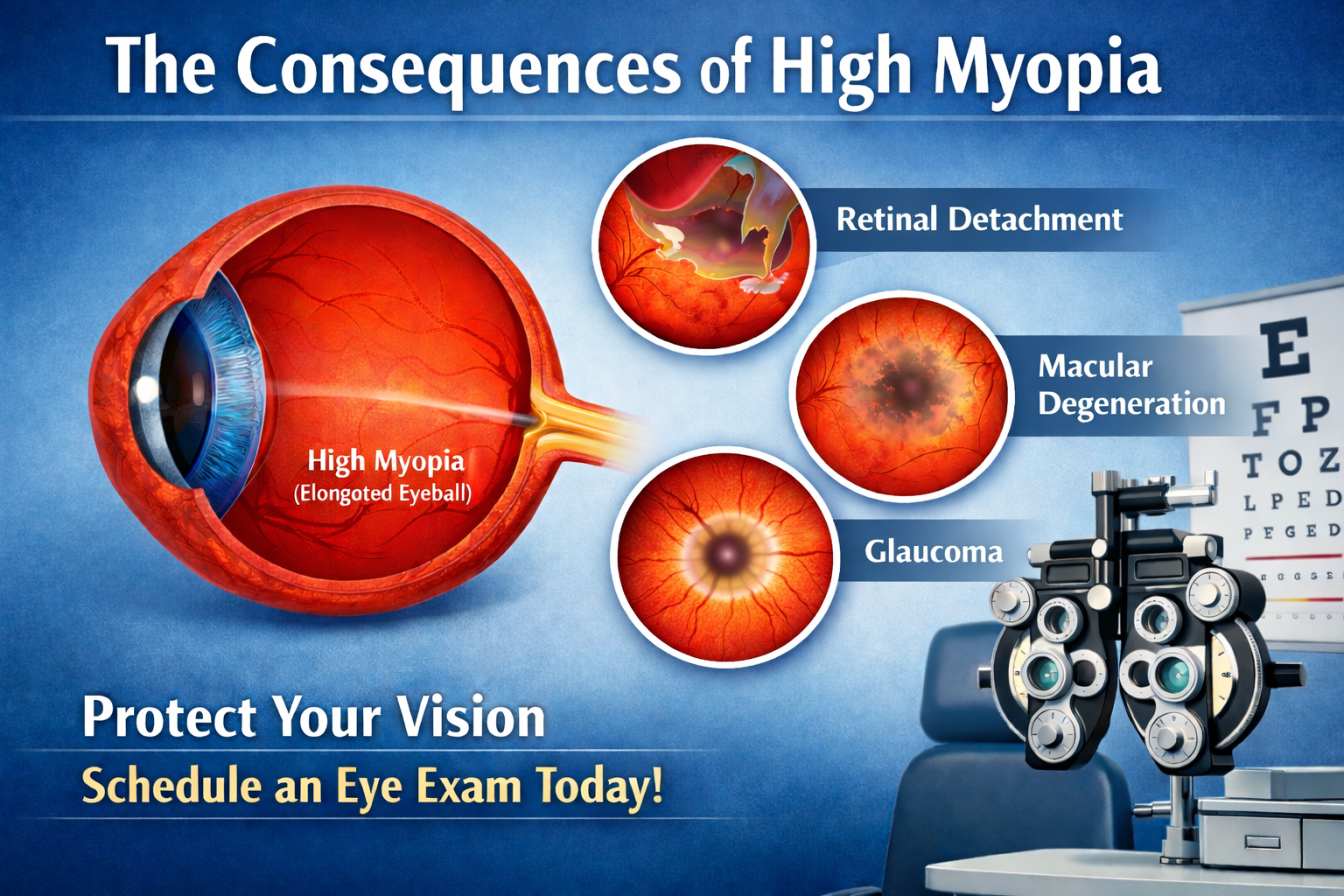
When someone develops high myopia, their eyeball has grown longer than normal. This stretching affects the delicate structures inside the eye—the retina, the macula, and the optic nerve—making them more vulnerable to damage over time.
Here’s the sobering reality: research shows that each additional dioptre of myopia increases the risk of myopic macular degeneration by 67%. That means a child whose myopia progresses from -3.00 to -6.00 has dramatically increased their lifetime risk of vision loss.
Serious Eye Conditions Linked to High Myopia
Retinal Detachment
People with high myopia are 5 to 6 times more likely to experience a retinal detachment compared to those with low myopia. The stretched, thinner retina is more prone to tears and holes. Retinal detachment is a medical emergency—without prompt treatment, it can lead to permanent vision loss.
Myopic Macular Degeneration
Unlike age-related macular degeneration, myopic macular degeneration can affect people as early as their 40s and 50s—right in their prime working years. It causes progressive damage to your central vision, making it difficult to read, drive, or recognise faces. The risk is over 800 times higher in people with high myopia compared to those without.
Cataracts
High myopia is associated with earlier development of cataracts, particularly posterior subcapsular cataracts. While cataracts can be surgically treated, the procedure carries additional risks for highly myopic patients, including a higher chance of post-surgical retinal detachment.
Glaucoma
The risk of open-angle glaucoma increases by approximately 20% for every additional dioptre of myopia. Glaucoma damages the optic nerve gradually and silently—often without noticeable symptoms until significant vision has already been lost.
There’s No “Safe” Level of Myopia
Here’s something important to understand: even low to moderate myopia carries increased risk. Research confirms there is no threshold below which myopia is completely harmless. The risks simply increase as myopia progresses—which is exactly why slowing progression early matters so much.
Reducing a child’s final myopia by just 1 dioptre could lower their risk of myopic macular degeneration by 40%. That’s not a small difference—that’s potentially decades of healthy vision.
The Good News: Myopia Can Be Managed in Hurstville
This isn’t meant to frighten you—it’s meant to empower you. Modern myopia management strategies available right here in Georges River can effectively slow progression in children and reduce their lifetime risk of these complications.
- Specially designed myopia control spectacle lenses (MiYOSMART)
- Orthokeratology (overnight contact lenses)
- Multifocal soft contact lenses
- Low-dose atropine eye drops
- Lifestyle changes (more outdoor time, managing screen habits)
The key is starting early—before myopia progresses into the high range. If your child is already myopic, the best time to act is now.
Protect Your Child’s Future Vision at Viewpoint Optical Hurstville
At Viewpoint Optical, we take myopia seriously. Our team can assess your child’s risk, monitor progression, and recommend the most appropriate management strategy to protect their long-term eye health.
Don’t wait until myopia becomes high myopia.
Schedule an appointment at Viewpoint Optical or call us on 02 8021 2298 to discuss myopia management options for your family. We’re located on Forest Road in Hurstville, easily accessible from Penshurst, Kogarah, and all Georges River suburbs.
Because when it comes to your child’s eyes, every dioptre matters.